
Ask any server which part of the job tires them out the most. The answer will surprise you: it's not dealing with difficult customers or carrying heavy trays. It's the empty steps.
In the classic service model, a server walks up to a single table at least 5–6 times:
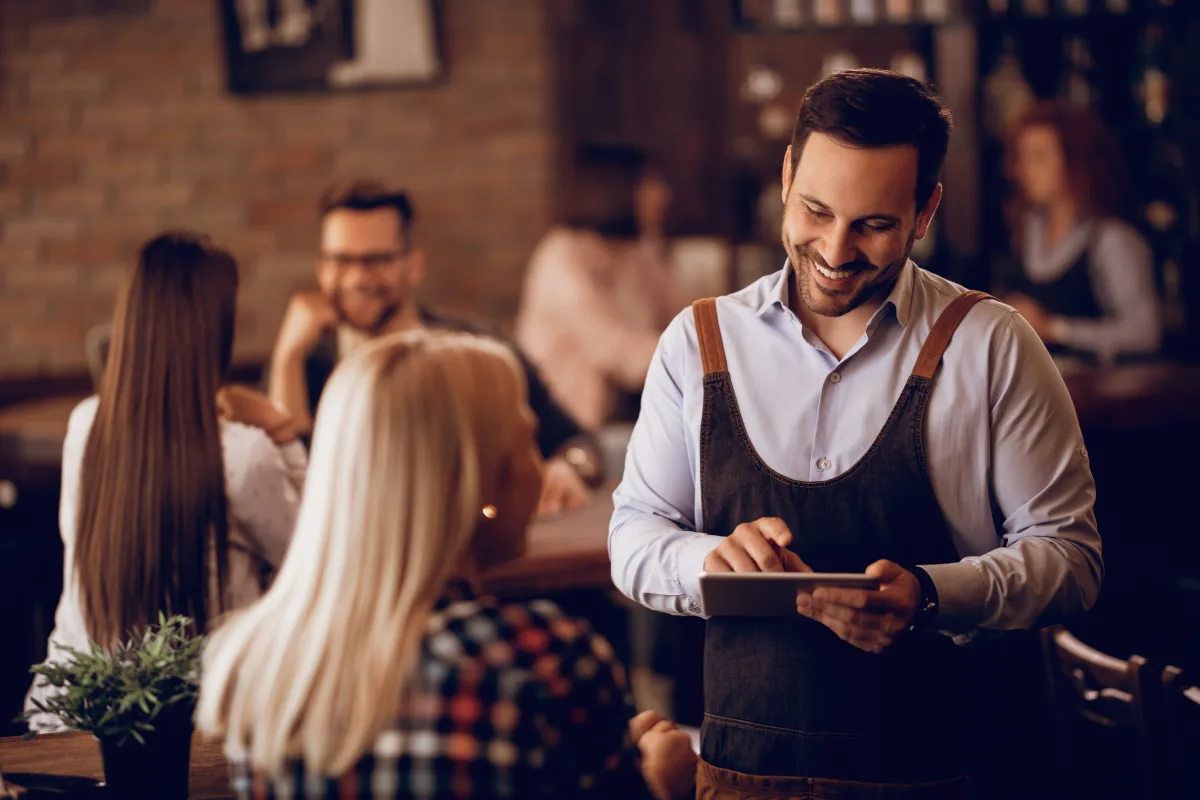
- Bring the menu.
- Come over to take the order (often hearing: "Oh, we haven't decided yet, give us 5 minutes").
- Check with the kitchen about allergen details.
- Bring the dishes.
- Ask if everything tasted good and bring the bill.
- Come back with the card terminal.
On a Friday night, with a full room, this logistics turns into a nightmare. Servers run around in a frenzy, guests wait 15 minutes for the bill (and meanwhile a line of new customers is already waiting outside for their table!), the level of service drops, and tips shrink.
How do you break this pattern?
Smart managers figured it out long ago: what you automate is not people, but the routine. If we move the basic, mechanical tasks – browsing the menu, requesting the bill, picking dish options – onto the guest's own smartphone interface, the server is freed from the role of "living notepad."
Their job changes completely. They become a true host of the room: serving hot food on time, keeping things clean, and giving the guest quality attention instead of mindlessly running back and forth with slips of paper. The result? Service speed rises by a third, the team's fatigue drops, and tables turn over faster, generating more profit on the very same evening.
Making a restaurant run like a Swiss watch even at peak rush is a challenge – but an absolutely achievable one. Sometimes all it takes is taking the load off your team's hands by handing the boring part of the work over to modern technology.